
Cante
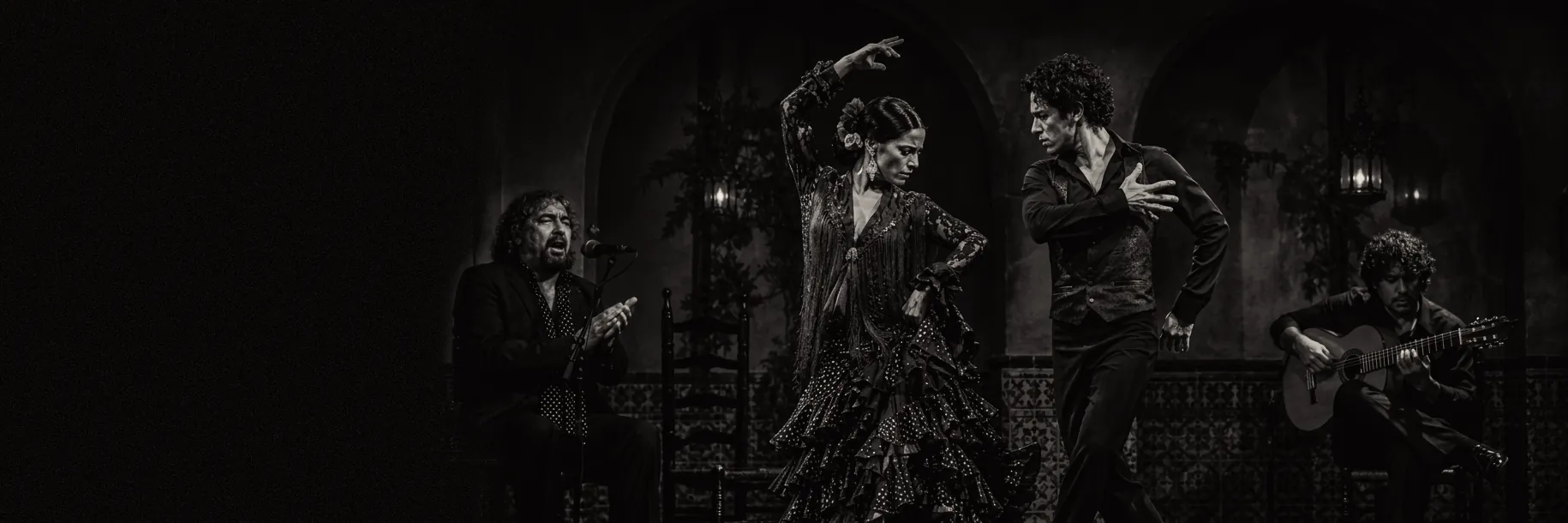
The song, the heart of flamenco. From the deep, aching cante jondo to festive songs, it guides the whole show.
Guide
History, palos, compás and tips: a short guide to understand, feel and enjoy your evening at the tablao.
The pillars
The song, the heart of flamenco. From the deep, aching cante jondo to festive songs, it guides the whole show.
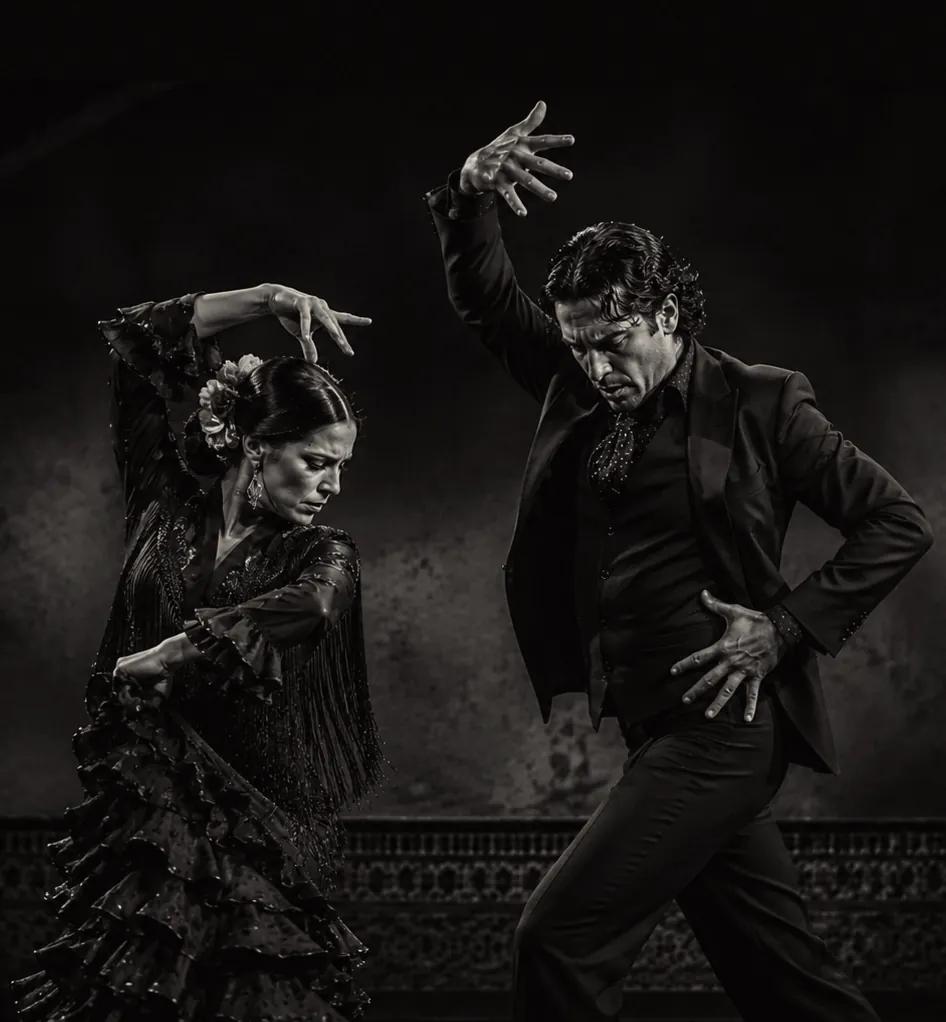
The dance: arm work, gaze, zapateado (footwork) and silences. The dancer converses with the song and the guitar.
The flamenco guitar, percussive and virtuosic, carries the rhythm and answers the song with its falsetas.
Hand-clapping and shouts of encouragement (¡Olé!, ¡Eso es!) keep the compás and energise the artists.
First time?
Tablaos are small and fill up fast, especially at weekends and during festivals.
Seats are often allocated on arrival, and you’ll have time for a drink.
Palmas follow a precise compás: leave them to the artists. A heartfelt “¡Olé!”, however, is always welcome.
The most intense moments are often the quietest. Enjoy them without talking.
Most tablaos allow a few photos without flash. Videos are often forbidden: ask first.
You don’t need to understand everything. Flamenco is felt: let the duende come.
History
In Andalusia, Gitano, Andalusi, Jewish and Castilian traditions meet. From this blend comes a deep song, handed down within families.
In Seville, the cafés cantantes open: halls where people come to hear singers and dancers. Flamenco becomes a professional performance.
In Granada, Manuel de Falla and Federico García Lorca organise a contest to preserve the purest song.
Modern tablaos are born in Madrid, Seville and Barcelona. The great dancers forge their legends there.
Paco de Lucía and Camarón de la Isla transform guitar and song, opening flamenco to the whole world.
UNESCO inscribes flamenco on the Representative List of the Intangible Cultural Heritage of Humanity.
The palos
Each palo has its own rhythm (compás), mode and character. Click to see its compás in motion.
The palo of Jerez par excellence: fast, playful and full of improvisation. Often the grand finale of the show.
The “mother” of flamenco. A slow, majestic 12-beat rhythm that expresses gravity and solitude.
From Cádiz, a joyful song in a major key. Perfect for the bata de cola and the shawl.
One of the deepest songs, with an irregular rhythm, expressing pain and mourning.
A catchy, danceable 4-beat binary compás, hugely popular in Triana and Granada.
Songs from Huelva and Málaga in triple time, where the voice unfolds freely.
The dance of the Seville Fair, in pairs and in four parts. Anyone can learn it!
The slow, majestic cousin of the tangos, with great dramatic intensity.
Mini glossary